


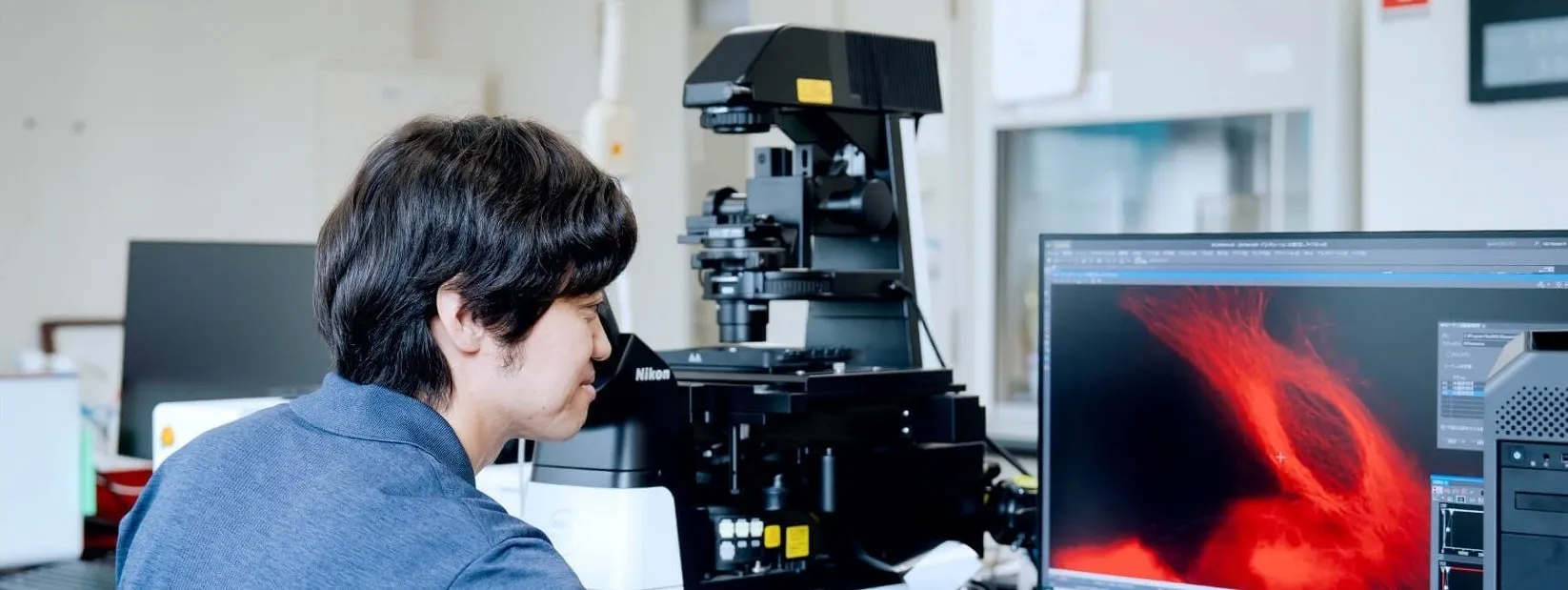
Our laboratory uses biomolecular design, particularly the design of peptides and proteins, toward controlling the structures and functions of the cytoskeletons including microtubules, developing technologies to manipulate cellular functions, and creating biomaterials with dynamic properties. Below, we introduce some of our research achievements to date.
Controlling Microtubule Structures and Functions through the Encapsulation of Nanomaterials
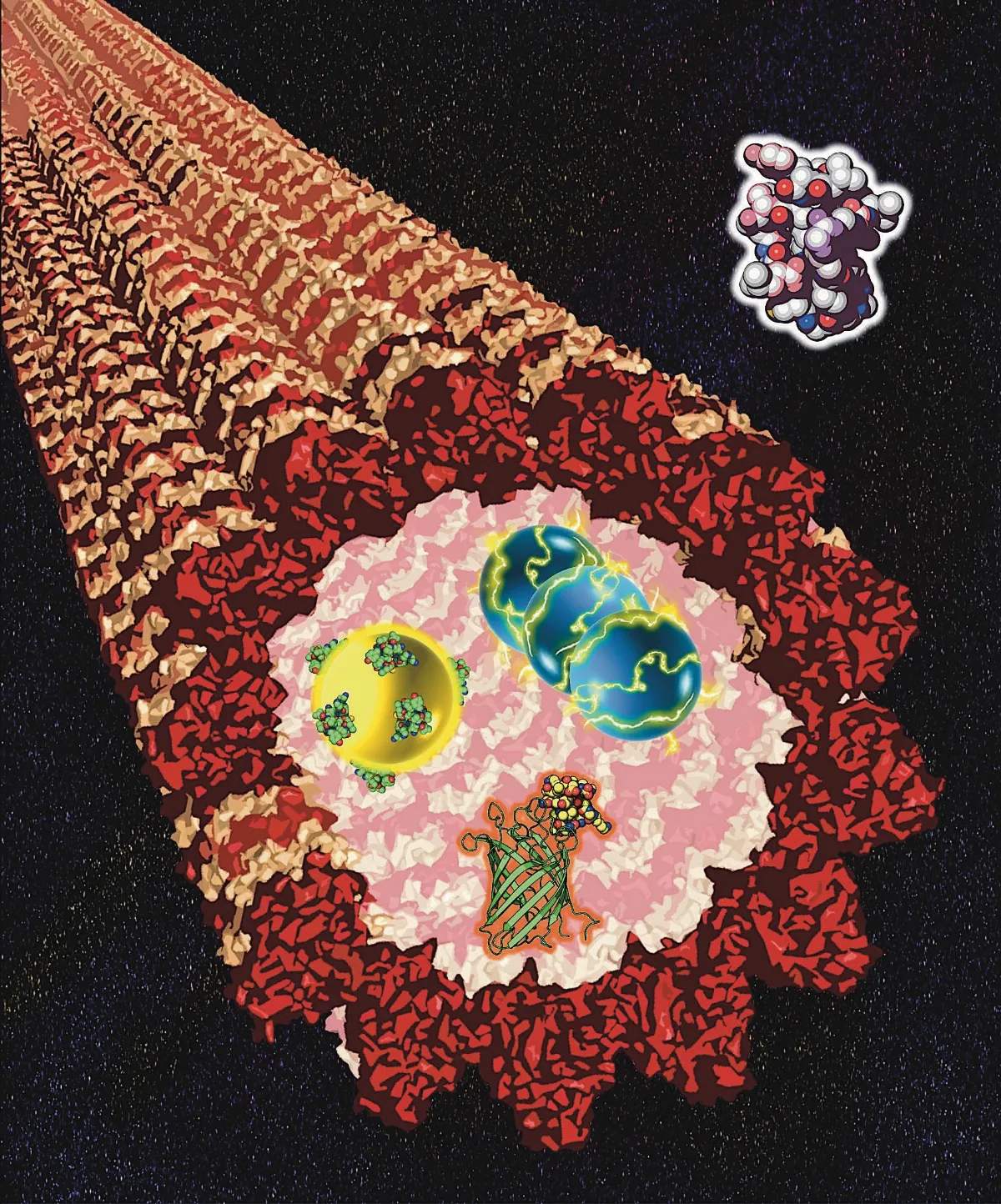
Microtubules are cytoskeletons composed of tubulin proteins. They generally form tubular structures with an inner diameter of approximately 15 nm. When combined with motor proteins such as kinesin, microtubules exhibit motility and have therefore attracted attention as components of active matter, a class of materials capable of autonomous movement. Although numerous studies have reported the functionalization of the outer surface of microtubules, their inner space had received little attention as a potential space for functionalization. In recent years, proteins that bind to the inner surface of microtubules have been identified, drawing increasing interest in their biological roles. We developed a Tau-derived peptide (TP) that binds to the inner surface of microtubules and explored new functions by using the inside of microtubules. By conjugating various molecules and materials to TP, we successfully introduced a wide range of nanomaterials into microtubules, including proteins, metal nanoparticles, cyclic peptides, and photochromic molecules. We have also demonstrated that the structures and functions of microtubules can be altered depending on the encapsulated materials. In the future, this technology may contribute to the development of novel functional materials, including microtubule-based nanodevices and molecular robots.
- Chem. Eur. J., 2018, 24, 14958. DOI: 10.1002/chem.201802617
- Chem. Commun., 2019, 55, 9072. DOI: 10.1039/C9CC04345D
- Polym. J., 2020, 52, 1143. DOI: 10.1038/s41428-020-0356-3
- Nano Lett., 2020, 20, 5251. DOI: 10.1021/acs.nanolett.0c01573
- Chem. Lett., 2022, 51, 348. DOI: 10.1246/cl.210761
- Sci. Adv., 2022, 8, eabq3817. DOI: 10.1126/sciadv.abq3817
- ChemBioChem, 2022, 24, e202200782. DOI: 10.1002/cbic.202200220
- Bull. Chem. Soc. Jpn., 2023, 96, 1082. DOI: 10.1246/bcsj.20230162
- Cytoskeleton, 2026, 83, 259. DOI: 10.1002/cm.70034
Artificial Construction of Microtubule Superstructures
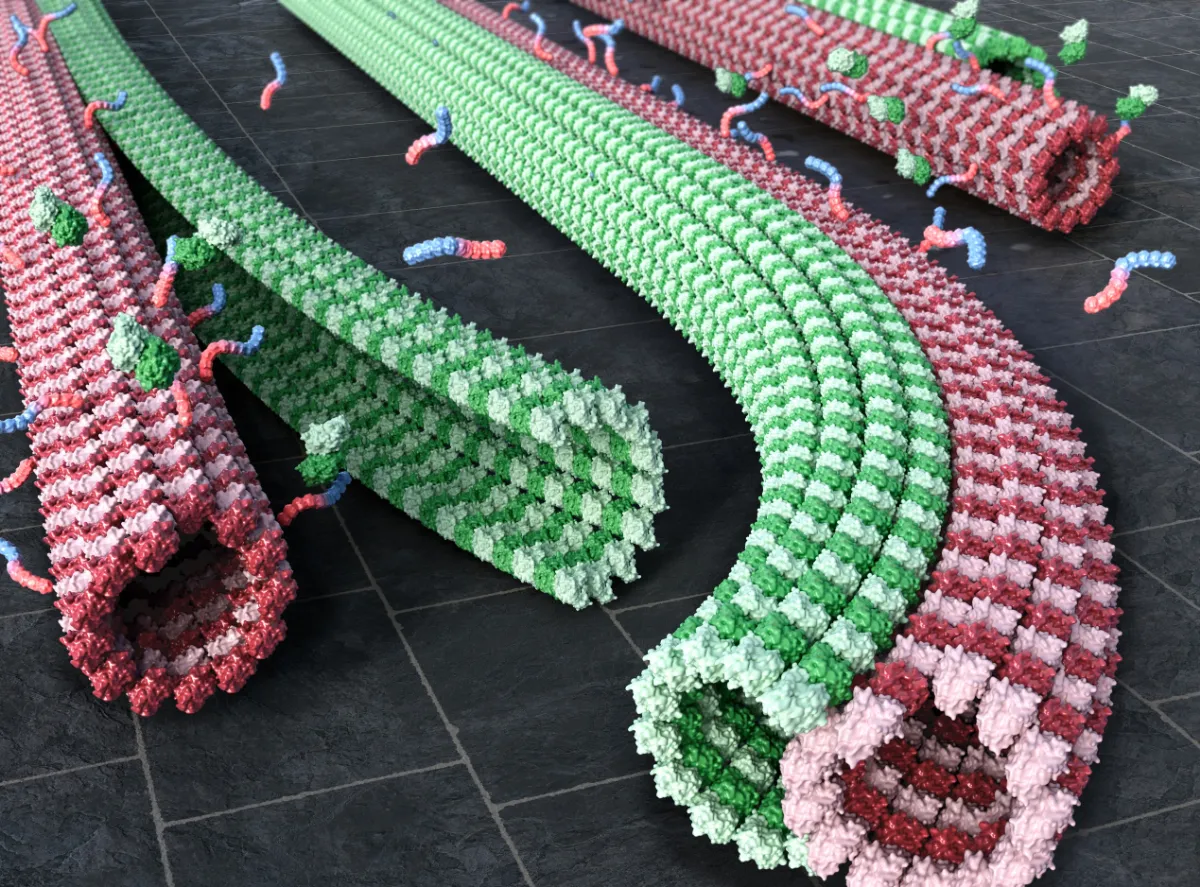
Microtubules typically form individual tubular structures. In living organisms, however, multiple microtubules can assemble into complex microtubule superstructures. For example, cilia and flagella contain doublet microtubules, in which an incomplete microtubule is attached to the outer surface of a complete microtubule. Doublet microtubules are thought to provide the mechanical strength required for the repetitive motion of cilia and flagella. A variety of other microtubule superstructures also exist, including branched structures, aster-like structures, and bundled structures. Each of these superstructures performs distinct functions. The ability to construct such microtubule superstructures artificially would help us understand and control their formation mechanisms and biological functions. It could also open new opportunities for materials applications. By genetically fusing TP to a tetrameric protein, we achieved the artificial construction of diverse microtubule superstructures, including doublet microtubules. We also developed technologies that use light to control the assembly and dispersion of these superstructures, as well as methods for constructing them from peptides without the use of proteins. By artificially reconstructing naturally occurring microtubule superstructures and extending them into architectures not found in nature, we aim to open new possibilities in both microtubule research and biomaterials development.
- Sci. Adv., 2022, 8, eabq3817. DOI: 10.1126/sciadv.abq3817
- JACS Au, 2025, 5, 791. DOI: 10.1021/jacsau.4c01017
- RSC Chem. Biol., 2025, 6, 737. DOI: 10.1039/D4CB00290C
Manipulating Cellular Functions through Structural Control of Microtubules
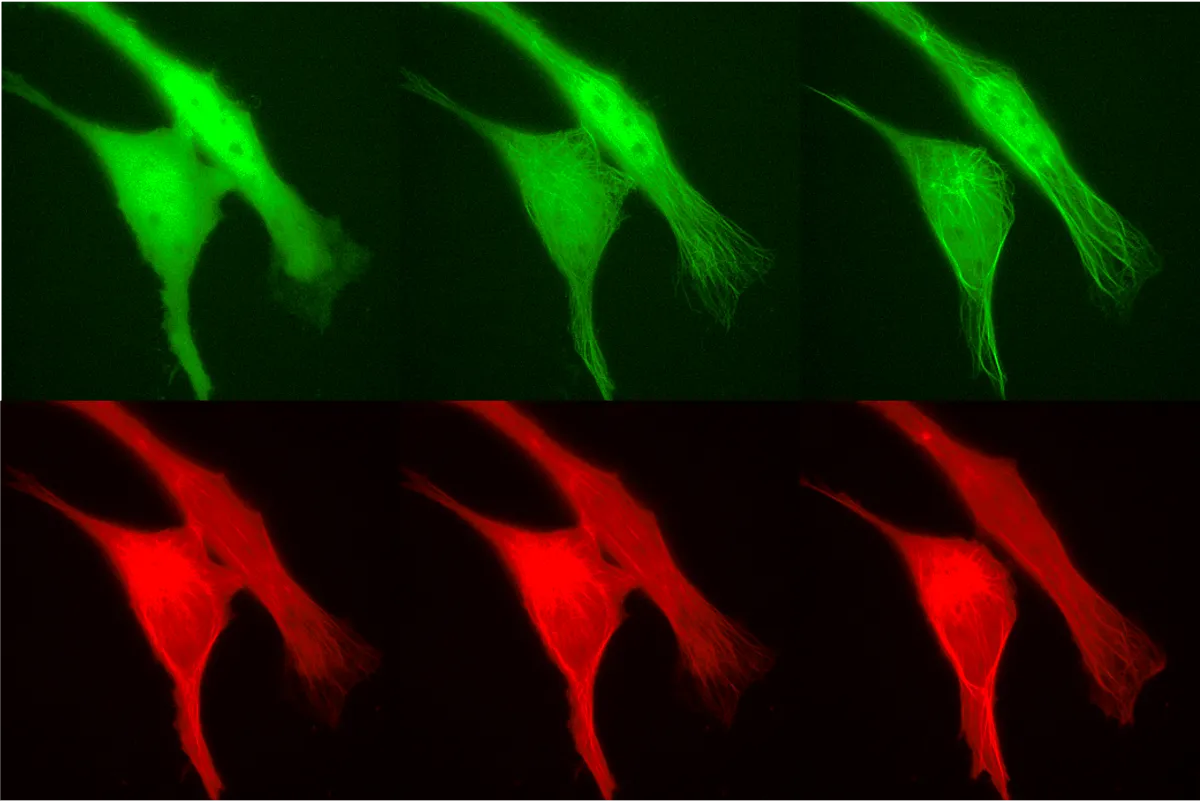
Microtubules play essential roles in various cellular functions including cell morphology, motility, and division. Controlling the structures and functions of intracellular microtubules is a promising approach to manipulating cellular functions. To date, many small-molecule compounds that bind to microtubules and alter their structures have been developed, some of which are used as anticancer drugs. In contrast, we are developing peptide- and protein-based technologies for the artificial control of intracellular microtubules. We demonstrated that TP binds to microtubules in both mammalian and plant cells. We also succeeded in stabilizing microtubules and inducing cell death in response to light. Recently, we developed “MT-Bundler”, a protein-based tool that crosslinks microtubules. By bundling intracellular microtubules with MT-Bundler, we demonstrated that cellular properties such as morphology, mechanical properties, and migration can be artificially controlled. We have also succeeded in inducing microtubule crosslinking in response to chemical or light stimuli. Through the targeted structural control of intracellular microtubules, we aim to develop technologies that enable precise and versatile manipulation of cellular functions.
- ACS Omega, 2019, 4, 11245. DOI: 10.1021/acsomega.9b01089
- Chem. Commun., 2022, 58, 9190. DOI: 10.1039/D2CC01890J
- PLoS ONE, 2023, 18, e0286421. DOI: 10.1371/journal.pone.0286421
- bioRxiv, 2026. DOI: 10.64898/2026.01.22.700042